
Introduction
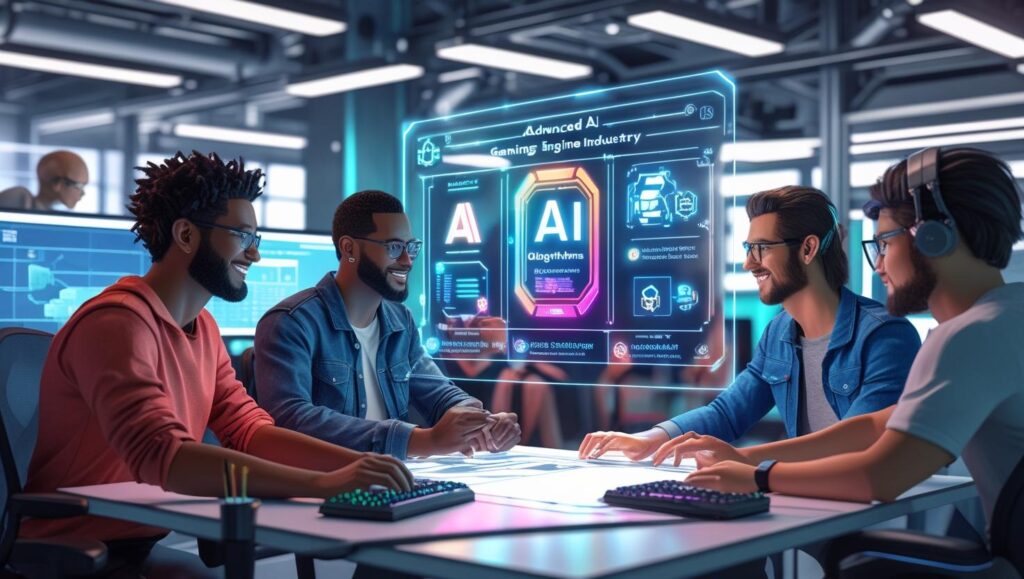
In recent years, AI in Gaming has rapidly transformed from a niche concept to a foundational technology in the gaming industry. From dynamic storytelling to smarter non-playable characters (NPCs), AI is redefining how we play and create games. It’s not just about better graphics or faster gameplay anymore—it’s about games that learn, adapt, and evolve with each session.
Today’s developers are using AI to create interactive environments that change based on player behavior, build game content automatically, and even develop whole storylines on the fly. Whether you’re exploring vast open worlds, fighting AI enemies, or building with friends in a sandbox game, AI is silently working behind the scenes to make it all more exciting, engaging, and personal.
From Static to Smart: A Paradigm Shift
Traditional games followed fixed scripts and predictable behavior patterns. Enemies repeated the same moves, maps remained unchanged, and player decisions often had little impact on the world. AI has completely flipped that model.
Now, enemies learn from your combat style. Storylines adjust based on your past actions. And NPCs respond in realistic ways, making interactions feel more like real-life conversations than pre-coded exchanges. This shift has brought games to life in ways we never imagined possible.
How AI is Powering AI Free Games

Free-to-play titles have become a dominant force, and many now rely on AI to keep players engaged. AI free games use machine learning algorithms to recommend challenges, tailor content, and increase replayability. Rather than offering a linear path, these games adjust to a player’s choices, keeping the experience fresh with each login.
Some platforms use AI to match players with similarly skilled opponents or predict when a player might leave the game and intervene with rewards or challenges to bring them back.
Building Smarter Worlds with AI Minecraft
Minecraft’s open-ended gameplay makes it a perfect candidate for AI integration. In the AI in gaming industry, the use of AI plugins and mods, players can generate incredibly complex structures, automate gameplay mechanics, or even simulate intelligent civilizations.
AI minecraft bots can gather resources, explore the map, or react to player actions. Developers are experimenting with AI-driven architecture and city planning tools that allow players to construct entire towns with just a few commands.
AI Dungeons and the Rise of Infinite Storytelling
Text-based adventures have evolved through AI dungeons—where language models generate unique storylines in real time. Unlike pre-written scenarios, these AI systems respond to any player input with creative, logical, and often humorous outcomes. No two playthroughs are alike.
It’s storytelling without boundaries, powered by neural networks that “understand” tone, genre, and pacing.
Creating New Realities: AI Generated Game Content
Developers are increasingly using AI to generate textures, characters, music, and environments. This not only reduces development time but adds layers of variety and creativity that would be difficult to achieve manually.
In an ai generated game, landscapes can adapt to gameplay, enemies evolve over time, and every player’s experience is visually distinct. This procedural design model opens doors for smaller studios to build expansive worlds without massive budgets.
AI Wars: When AI Becomes the Player
Competitive games are now pitting human players against adaptive AI bots. In AI wars, these bots learn from real matches, analyze player habits, and come back stronger. It’s not about winning against predictable scripts anymore—it’s about outthinking a digital mind that learns just like you do.
Esports titles are also incorporating AI for training simulations. Pro players now use advanced AI bots for practice, gaining a sharper edge in competitive settings.

Elevating the Player Experience: AI for Gamers
AI is also enhancing the experience outside the core gameplay. In the AI in gaming industry, AI for gamers means smarter recommendations, personalized tips, real-time coaching, and content suggestions based on skill level and playing history.
For example, some games offer dynamic tutorials that change based on player behavior, ensuring you get the right help at the right time. It’s a more inclusive, accessible experience that adapts to every gamer’s unique needs.
Next-Level Realism in AI Video Games
In ai video games, the bar for realism keeps rising. AI drives physics engines that mimic real-world behavior. Facial animations are generated using machine learning to sync perfectly with voiceovers. Environments respond to changes in weather or player interaction.
These subtle AI details create a rich tapestry of realism, making every quest, battle, or dialogue scene feel tangible and immersive.
The Mechanics Behind Game AI
Behind every immersive interaction is a complex game AI system. It’s more than just pathfinding and basic logic. Modern systems incorporate reinforcement learning, neural networks, and behavior trees to create lifelike simulations.
Whether it’s an enemy adapting its strategy mid-battle or an ally learning to support your unique playstyle, these systems add nuance and realism.
AI Game Development: Tools of the Future
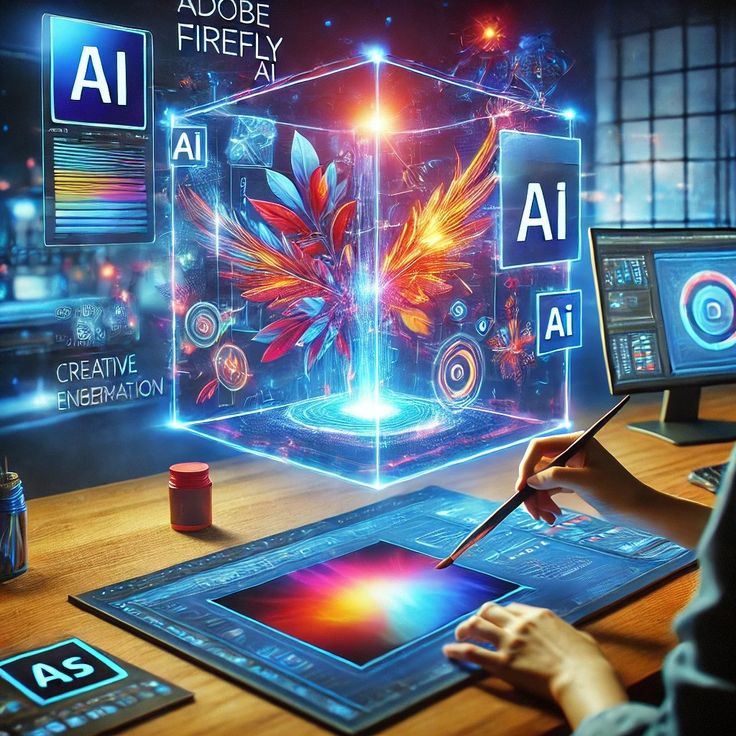
AI game development tools are transforming how games are made. From procedural asset generation to bug detection and even auto-balancing difficulty levels, AI is streamlining the entire workflow.
Studios use AI to simulate thousands of hours of gameplay to test balance, pacing, and stability. Others employ AI voice tools to generate dialogue from text—saving time and enhancing localization for global markets.
Mobile Legends AI Esport and the Role of Smart Bots
In mobile esports, such as mobile legends ai esport matches, AI-controlled opponents and allies are no longer filler—they’re a feature. These bots mimic human tactics, adapt during games, and even exhibit team synergy, giving players a run for their money.
They also help new players ease into ranked matches without the pressure of facing seasoned competitors.
Reinventing Characters with AI NPCs
In the AI in gaming industry, AI npcs are becoming indistinguishable from real players. Gone are the days of one-line dialogues and stiff animations. These characters have memory, emotions, and can change based on your actions.
In story-driven games, your relationship with an AI NPC might influence quest availability, faction dynamics, or even game endings.
Benefits and Concerns Around AI in Games
Advantages:
- Smarter gameplay experiences
- Scalable content creation
- Reduced production time and cost
- Better player retention and satisfaction
Concerns:
- Ethical use of player data
- Potential over-reliance on automation
- Risk of bias in AI decision-making
- Unpredictable player-AI interaction outcomes
What Lies Ahead: Future of AI in Gaming

As AI models become more advanced, expect real-time voice interactions with characters, emotionally responsive NPCs, and full-length AI-designed games. The future may even bring games that adapt entire story arcs based on your mood, schedule, or choices across multiple titles.
FAQs
1. What are some examples of AI free games?
These include adaptive puzzle apps, strategy games with learning AI, and free RPGs that change based on choices.
2.Is it possible to use AI tools in Minecraft to automatically build structures? Yes, AI-driven mods and bots can automate mining, farming, and complex building tasks.
3. How do AI dungeons work?
They use language models to interpret player input and generate dynamic storylines on the fly.
4. Are AI-generated games playable offline?
Most use cloud-based services, but some can generate and store assets locally for offline play.
5. Do AI video games require special hardware?
Not necessarily. Many AI features run on cloud servers, keeping local system requirements modest.
6. How do AI NPCs differ from traditional ones?
They learn, adapt, and interact more naturally, offering nuanced conversations and behavior based on gameplay.
Conclusion
AI is no longer a futuristic concept—it’s the present driving force behind the next generation of gaming. From ai free games and ai minecraft adventures to ai dungeons and mobile legends ai esport bots, artificial intelligence is empowering players and developers alike. As game ai evolves, so will the depth, creativity, and connectivity of our digital experiences.
Whether you’re battling adaptive enemies, shaping unique worlds, or writing your own story with AI, one thing is certain the AI in gaming industry will make the future of gaming will be smarter, richer, and more personal than ever before.
AI is changing the game—literally.
From worlds that adapt to you, to NPCs that think for themselves, the future of gaming is here.
Dive into how AI is transforming play in our latest post at Gamentech.
Read now & step into the future of gaming!
It’s fascinating how easily accessible online gaming has become, especially with platforms prioritizing quick transactions & local payment options. Seamlessness is key! Considering a new platform? Check out the jljl775 app download for a streamlined experience – security & speed matter!
Really interesting read!
Interesting analysis! Secure platforms like 365 jili download are vital for building trust. KYC & strong logins (like they emphasize) really matter for a safe experience, beyond just the games!
That’s a fascinating point about game design encouraging repeat play! It reminds me of platforms like phspin games, where secure KYC & smooth payments (like GCash!) boost player trust & longevity. Great article!
Interesting analysis! Good stuff!
Your blog is a beacon of light in the often murky waters of online content. Your thoughtful analysis and insightful commentary never fail to leave a lasting impression. Keep up the amazing work!
Your blog is a breath of fresh air in the often mundane world of online content. Your unique perspective and engaging writing style never fail to leave a lasting impression. Thank you for sharing your insights with us.
Your writing has a way of resonating with me on a deep level. I appreciate the honesty and authenticity you bring to every post. Thank you for sharing your journey with us.